Garmin Oregon 450 Handheld GPS Navigator

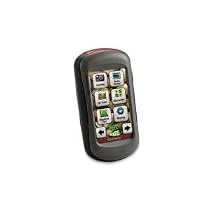
Oregon 450 leads the way with a tough 3-inch diagonal sunlight-readable color touchscreen display that offers crystal clear enhanced colors and high-resolution images. Its easy-to-use interface means you?ll spend more time enjoying the outdoors and less time searching for information. With user-selectable dashboards you can customize the appearance of your display. Both durable and waterproof Oregon 450 is built to withstand the elements. Bumps dust dirt humidity and water are no match for this rugged navigator. Package includes: Oregon 450 USB cable carabiner clip and quick start manual

  • 3-axis tilt-compensated electronic compass and barometric altimeter

  • Improved 3" sunlight-readable color touchscreen display enhanced clarity

  • High-sensitivity GPS receiver with HotFix for improved performance and reception

  • High-speed USB for faster map transfers with your computer

  • Wirelessly share routes tracks waypoints and geocaches between units


More detail ...

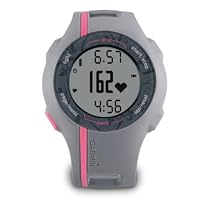
Garmin Forerunner 110 GPS-Enabled Sport Watch with Heart Rate Monitor (Pink)

The easy-to-use Forerunner 110 sport watch tells you how far and how fast. It's GPS-enabled to accurately record your time pace distance and calories burned. When paired with a heart rate monitor the Forerunner 110 provides heart rate-based calorie computations to help you track your calories burned. There's no setup required so you can just press start and run or walk with it. Once your workout's done upload to Garmin Connect to store and share your data see the route you traveled on a map and even create goals. It's GPs made simple!

  • GPS-enabled trainer watch accurately records your distance time and pace

  • High-sensitivity GPS receiver stays locked on satellites even near tall buildings or under tree cover

  • Rechargeable battery provides 8 hours life in training mode 3 weeks in power save mode

  • Upload data to Garmin Connect site to view workout summaries create goals and more

  • Includes heart rate monitor for heart rate-based calorie computation


More detail ...

Forerunner 110 W/HRM by Garmin

115259 Features: Keep track of how far you've run and how fast with this GPS-enabled watch; easy setup requires only a couple of questions for you and you're out the door running HotFix satellite prediction system provides constant coordinates with a high-sensitivity GPS receiver that stays locked onto satellites even near tall buildings and trees Keep track of of your hear rate with the included heart rate monitor which also allows you to calculate calorie expenditure for weight loss and fueling purposes Record your laps and workouts to afterward you can download and track your data using the Garmin Connect website that provides analysis and sharing capabilities Record your laps with laps history feature that allows you to automatically start new laps with the Auto Lap feature Specifications: Weight to dimensions: 18 oz to 18 x 27 x 06 inches Display size: 10 x 10 inches Battery type to battery life: rechargeable lithium-ion to 3 weeks (power save mode); 8 hours (training mode) Waypoints to routes: 0[]More detail ...

Garmin eTrex Venture HC GPS Receiver

The Garmin® eTrex Venture® HC handheld GPS is a reliable addition to any outdoor excursion. It features a high-sensitivity GPS receiver for peak performance in any environment and includes 24 MB of internal memory a detailed basemap and a crisp color screen.

  • High-Sensitivity WAAS-Enabled GPS Receiver Provides Peak Performance In Any Environment

  • Built-In Basemap Includes Lakes Rivers Cities Interstates National & State Highways Railroads & Coastlines

  • Features A 1.7-InchH X 1.3-InchW Screen With 256-Level Color Tft

  • Usb Compatible For High-Speed Map Downloads

  • 24 Mb Of Internal Memory Allows User To Load Waypoints & Routes From The Included Mapsource Trip & Waypoint Manager Software


More detail ...

Garmin GPS 60CSx Handheld GPS Navigator

Garmin GPS MAP 60 CSx. The GPS MAP 60 CSx is one of the most popular GPS models for outdoor and marine use. It incorporates a barometric altimeter for extremely accurate elevation data and an electronic compass that displays an accurate heading while standing still. The 60CSx also features a removable microSD card for detailed mapping memory and a waterproof rugged housing. The microSD card slot is located inside the waterproof battery compartment. You can load map data and transfer routes and waypoints through the fast USB connection. In addition the GPS MAP 60C Sx has a new highly sensitive GPS receiver that acquires satellites faster and lets you track your location in challenging conditions such as heavy foliage or deep canyons. Electronic compass displays accurate heading while standing still; Barometric altimeter with automatic pressure trend recording; New high-sensitivity WAAS-capable GPS receiver by SiRF; Built-in quad-helix receiving antenna with remote antenna capability; Supports English Spanish Portuguese and French languages; MicroSD card slot allows for storage of optional Map Source detail (64 MB microSD included); LED backlit display and keyboard; Up to 18 hours of battery life from 2 AA alkaline batteries; Includes a built-in Americas autoroute basemap with automatic routing capabilities including highways exits and tide data (U.S. only); Internal memory is preloaded with a marine point database Enough memory for 1000 user waypoints with n

  • High-sensitivity GPS receiver

  • Bright sunlight-readable color TFT display

  • Color-handheld mapping ideal for both marine and outdoor use

  • 64 MB microSD card for storage of optional map detail; NOTE: microSD card is located in the device not as a separate additional item

  • Fast USB connectivity makes loading charts and maps quick and easy


More detail ...

Garmin Approach G5 GPS-Enabled Golf Handheld


  • Rugged waterproof golf GPS unit with 3-inch sunlight-readable touschreen display

  • Preloaded U.S. course maps including fairways hazards and greens

  • No annual fee; new maps available for download from Garmin.com

  • Measure shot distance with highly sensitive readings to eliminate guesswork from your game

  • Digital scorecard for up to four players; save and review the scores on your computer at home


More detail ...

Garmin GPS 60CSx Handheld GPS Navigator


Top of the line!5

The first reviewer didn't really do his research before he purchased this or else he would know that it only comes with basemaps. The other fact he would know is that that's how all GPS vendors work. They want you to buy their maps separately and only their maps will work on their hardware.


Now I previously owned a 60CS which I loved after trading in my Vista. With the newly upgraded 60CSx you get a couple of additional functions that make it much better than the 60CS. First there's the SiRF III chipset. It is by far the best chipset out there right now. It's super sensitive and super fast. You can lock onto satellites even in your house in many cases! No longer will you loose reception in tricky situations. Most of the time you can even keep the 60CSx in your backpack and it will still track your movements.


The other highly requested function for many years is the expansion memory now in the form of a microSD. Now you can load almost half of the U.S. into 512mb of microSD. Later larger capacity microSD cards will be released that will allow you to loan the entire US! That's awesome!


Two things that you will loose by going to the 60CSx from the 60CS the alarm clock and the passive barometric tracking. Apparently the new 60CSx no longer has a sleep mode so that these two things will not continue to work if you turn OFF the unit. The 60CS had a sleep mode so that the altimeter would still record your barometric after the unit was turned off and wake up to sound the alarm clock but not with the new 60CSx.


Most people don't use these functions anyway so I don't think you'll miss them. Also the SiRF III and microSD more than make up for those two shortfalls.More detail ...

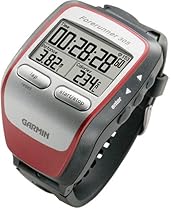
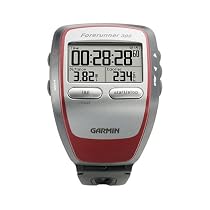
Garmin Forerunner 305 GPS Receiver With Heart Rate Monitor


Excellent workout tool4

I like this thing quite a lot. I've had it for about three weeks and have used it on 12 workouts so far. I use it primarily for running with biking a secondary usage. The main reason I wanted it was for the instantaneous readout of distance running pace and heart rate the latter needed for the speed work I want to do this running season.


The core functionality (distance and heart rate monitoring) works perfectly. There's none of the signal drops I've had with other heart monitors. Once the satellites are initially acquired I've only had one dropout when I was outside. The initial acquisition of the satellites can be quirky and can take some time. The accuracy (according to the readout) is +/- 25ft depending on how many satellites can be found. I've compared the distance measurement on the GPS with a known measured distance on one of the trails I run on (the Chicago lakefront path). The GPS always increments a mile when I'm within 5 or 10 feet of the mile marker sign on the path. Well I guess that's the least I should expect from a $350 GPS unit! Of course it's bigger than a normal running stopwatch but that hasn't bothered me at all. The heart rate strap is also very comfortable and well-designed.


The display is crisp and has one outstanding feature: The information presented on the various pages can be completely user-customized. The default screen layout is rather poor but in just a few steps I could replace it with the information I wanted to see while I run. There are almost 40 different data fields you can choose from for display. Examples: current pace average lap pace average run pace heartrate distance.


The only disappointment is the point-in-time (instantaneous) pace measurement: It varies wildly during a run. I see swings as big as +/- 3 minutes/mile. I'm a marathoner and I know my pace is fairly consistent during a run. I just looked at my run today and according to the data the first mile varied from 5:57/mile to 12:06 mile. I suspect the problem is either in the averaging algorithm (too short a distance?) or in the uncertainty that results from different satellites coming in and out of view. The variations seem to get worse under tree cover compared with an open area. Luckily there's a lap-average pace that can be presented and at least that value is useful and more accurate. The bottom line is that you can't look at the watch and say "right now I'm running 9 mins/mile". There is the ability to specify a pace smoothing factor but I have it maxed out and still see the variations. The elevation readout also seems inaccurate but that isn't important to me.


Upload of workout data to the PC software (Training Center) is transparent. The PC software is very good for presenting time/distance/pace/heartrate/calorie data. However the maps it shows are very crude. I've worked a bit with one of the online subscription services (MotionBased). That looks really good and provides some additional functionality beyond the included Training Center software although I still haven't decided if it's worth the $$$ yet for long-term data storage. MotionBased allows export to Google Earth and it's tremendously cool to see your running path superimposed on a satellite image. You can recharge the unit through the USB port on your computer although it's slower than using the dedicated recharger.


I had hoped that owning this device would prove motivational for me and indeed it has. I can't imagine running or biking without it. Updating my training log is trivial now: Plug this thing into my computer and it's done. My hope is that a future software update will do something about the pace calculation (maybe a few additional levels of smoothing?). If so the Forerunner 305 would earn 5 stars+++.


Positives:


Flawless heart rate sampling

Great distance measuring and lap-average pace calculation

Seamless integration with a PC

Fully-automatic training log update

User-customizable display


Negatives;


Wildly-varying pace readout.

More detail ...

Garmin Oregon 550T 3-Inch Handheld GPS Navigator with 3.2MP Digital Camera (U.S. Topographic Maps)


Good but not perfect4

After using the 550t for several weeks I find the unit good but not perfect. It still has some issues one of which I have been in touch with Garmin over. The main issue I have is it will periodically corrupt the track file and stop showing the tracks on the map or allowing for elevation plots on the tracks. The only way to clear it is to attach the unit to a computer and replace the track file with a new one from the computer.

The compass sometimes loses it's way and needs to be recalibrated.

I have not had an issue with the accuracy under tree cover that some have reported but I have had a few tracks that were not 100% accurate. Walking on known roads it will be several 100 feet off in some cases. I am not sure if this is an issue with the preloaded Topo 2008 maps or the unit's accuracy.

I love the camera and the tagging of each photo.

For a new unit it is not bad but it still shows a few rough edges.


Just an update - After comparing the tracks for accuracy I found it was the 2008 Topo maps that were off. When superimposed over the City Navigator NT 2009 Street maps the 550t was dead on. So the accuracy concerns I have are shifted from the 550t itself to the topo maps it comes loaded with.More detail ...

Garmin GPSMAP 60Cx Handheld GPS Navigator


Very awesome product but map is lacking4

I still own my Garmin GPS 10. It's a wireless bluetooth gps device for a Pocket PC/Laptop. This product is so awesome I decided to stick with Garmin. This led me to the 60Cx.


The biggest con to this device is that the maps are very basic. Notice on all the 60Cx product images it'll say in small print "Shown with optional MapSource data." This might be bearable for hiking but is horrible for automotive use. You will need to buy detailed maps that can run over $100.


The extra features such as information on sunrise/sunset or fishing/hunting conditions are very convienent. This device is definately a dream for anyone who love gps functionality.


The color screen is also very nice. In direct sunlight I was able to see it with clarity. The brightness of the screen is at a perfect level for night use. It's not too bright and not too dim.


The controls are clumsy at times but i guess you'll get use to it. The sensitivity is great! I never got signal in my house with my GPS 10. The 60cx picked up signal with no problem.


My customization:


Garmin City Select North America v6 was included with my Garmin GPS 10. I registered the device online. Through Garmin's site I was able to generate a 2nd unlock code. I used this unlock code to installed City Select North American v6 onto my 60cx. It's funny that Garmin's site doesn't mention it was compatible with City Select. My 60cx now has detailed maps and added functions such as being able to search for addresses which wasn't possible with 60cx's basemaps. I am also very happy with the performance of the device. It basically does everything my Pocket PC and GPS 10 does. Once i installed the detailed maps this device has been a dream gps device. I used it in the car and for hiking. It will be great when I go visit New York for the first time.


Conclusion:

Overall I think this is a great gps device. It is solidly built and waterproof at that. Everything about it is great EXCEPT for the horrible basemaps. You will have to shell out over $100 for detailed maps but if you add up the total it still comes out cheaper than my Pocket PC + GPS 10 combo(about $640 for me). I think the 60cx is worth every penny.


EDIT:

May 2006


I've had the 60Cx for 3 months now. It is still an awesome device. One thing I want to comment on is battery life. I do not use regular alkaline batteries. I use Energizer Rechargables 2500mah and slow recharge at 8 hours per session. I entered in an address that was 2 hours from where I was started. It tracked my position estimated time til turn and estimated arrival time. When I got to my destination the GPS battery meter was at HALF. the GPS will only last on average of 4-5hours while on a route. This is still pretty good comparing it to my Dell Axim + GPS 10 combo. I am not sure how long it will last if you're just using it without being on a route.


I was a bit dissapointed that Garmin did not state how it got the 30 hours battery life. They might just mean 30 hours on standby.


Also the 60Cx does drain your batteries even while it is off. I had my unit stored in the drawer for a week. The batteries were drained. So it is highly recommended you get rechargable batteries for this device. If you are taking it with you on a trip bring at least two sets of battery.More detail ...

Garmin 010-00777-00 Foretrex 401 Portable GPS System


not ready for prime time2

One of my Foretrex101s expired a few weeks ago and I decided to replace it with the just released Foretrex401. It arrived mid-week and I had no trouble accessing and opening the Foretrex401 generated gpx file with Easy/ExpertGPS and Topofusion. The 401 appears as a USB drive in Windows. I was hoping to use the 401 along with the Garmin heart rate monitor during my mtbike rides instead of the my Edge205 and separate HRM. The 401 had no trouble picking up the HR reading and displaying the values.


Perhaps not surprisingly the Garmin website has no substantial information of the 401 as of yet and no discussion of what software will work with the 401.

[...]

At this point the Foretex401 appears to be corporate orphan that no Garmin division is able or willing to support. It is unclear if it is intended for jumping out of airplanes (jumpmaster function) hiking (altimeter/compass) cycling/fitness (HR/cadence) or providing a heads-up when ordinance is going to explode (countdown-up/timer). In addition to the above function wise the 401 adds a USB interface faster satellite acquisition and wireless data transfer to the venerable Foretrex101. It is slightly more compact in size than the 101 has a better strap attachments and stores the data is in a gpx file. Operationally the Foretex401 does what is it supposed to do but with no software included undocumented functions and virtually non-existent technical support most purchasers will be frustrated in trying to use the Foretrex401 right out of the box. A printed quick start guide is in the box but the manual in a pdf on the CD.


As noted above with some tinkering and non Garmin software I've been able to list and view the Foretex401 tracks waypoints routes and other data as well as transfer the data to GoogleEarth. For what Garmin lists as a basic handheld GPS it should be much more straightforward to operate and transfer data. I'll give it 2 stars until it is better supported.More detail ...

Garmin GPS 76CSX Handheld GPS with Barometric Altimeter and Electronic Compass


Garmin GPSmap 76CSx Great GPS!5

UPDATE: September 4 2008 - Still very impressed with the 76CSx unit. It has come in real handy recently shopping for a house. All my opinions stated previously are still current. One very handy feature the unit doesn't have that I wish it did was the ability to choose an alternate route while your are traveling. This can come in handy in the event there is a detour or you want to calculate a route around a traffic jam. This would create a by-pass route on-the-fly. Many street specific GPS units can do this. Although this unit can re-route if you go off course which is something different.


The '2008 City Navigator Map Update' is not much to be desired. I have not noticed any significant improvement in calculated routes or updated points of interest (POI) data over the 2007 maps release. The same errors that I have encounter initially are still there in the 2008 release(PA NJ NY areas). I am hesitant to purchase the 2009 update. I will probably wait until the 2010 Update.


The Foarm(R) case is the best protection out there still.


I am completely satisfied with this unit I have purchased & recommended other similar units by Garmin. Overall the 76CSx is still a great unit.


UPDATE: August 23 2007 - After reading reviews about the 2008 release of the Maps I decided to get. One special note: If you buy the update DVD make sure you get the correct release. For instance if you have previously installed City Navigator North America v8 you need City Navigator North America 2008 UPDATE. If you own City Navigator North America v8 NT you need City Navigator North America 2008 NT. Get it? I found out the hard way but Garmin came through!


UPDATE: August 21 2007 - A year has gone by and I still very much like my GPSmap 76CSx. Top notch!!! Garmin support has been great too. It's been great on on the road on the trails and even on a plane! Whether I am walking driving or riding my bike. Actually there isn't much I would change on this GPS unit. The button placement you get accustomed to very quickly and the menu-page layout is genius. It's been so easy to use this GPS. Once you read what each feature does the book really isn't required anymore. Using the menus to get around to all the features and functions is easy and self-explanatory. Since my initial purchase I have upgraded the expandable memory to 2GB (SanDisk microSD $22 on Amazon) and managed to fit the 48-states and some parts of Canada.


I see that there is a 2008 version of the North American maps replacing version 8. I am reluctant to purchasing this newer version since I have found quite a few out of date points-of-interests in the v8 maps. On a positive note using the maps I have had many successful finds.


Battery life using Duracell alkaline batteries while the GPS is set to "Alkaline" will last about 12 hours. I have tried 2500mAh Energizer rechargable batteries with the GPS unit set to "NiMH" but I only seem to get about 3 hours of use out of them.


Recently I have purchased a Garmin Nuvi 350 for my father from Amazon (price was great) and he really likes it but that unit is primarily for the road. Just what he wanted. The GPSmap 76CSx is loaded with so much more for so many other uses.


ORIGINAL review July 29 2006 -

Having the Foarm rubber protective case has kept the GPS looking and functioning as new. It's dropped a few times.

I highly recommend Garmin GPSmap76CSx unit to anyone looking for a GPS unit for the road hiking and/or boating. The numerous menus and features are very intuitive and easy to use. The hi-res color screen may be small compared to in-car GPSs but is very clear. The time for the satellite lock is relatively quick. Even while indoors I can get a lock on at least 3 or 4 satellites. Buildings with metal roofs or concrete floors above may not get any reception. This is expected of any unit.


For the road I would highly suggest purchasing the City Navigator North American v8 Maps ($112). The map extends the features of the GPS with turn-by-turn directions millions of points-of-interests (POI) such as fuel stations garages attractions restaurants and shopping venues. You can even upload your own POIs to the unit as well. Don't be surprised if some of the route calculations it comes up with seem a bit odd. It will get you there though. If you miss your turn it re-calculates a new route very quickly. There are numerous websites that provide POI files that you can upload to your unit. You will notice that some of the pre-installed POIs may not be up to date.


Unlike other handheld GPS units the memory is expandable. I installed a 1GB microSD card ($45) in order to store vast amounts of map data or tracking that you may have done. The entire US is about 1.5GB of information. The unit comes with a blank 128MB microSD memory card that I moved to my cell phone (bonus).


The sensors included are the electronic compass and barometer. Having an electronic compass allows one to determine ones (NSEW) direction without moving. Many GPS units determine direction by changes in position coordinates. Therefore you must be moving. Optional sensors such has for water temperature may be plugged into the back of the unit.


To protect your unit I recommend the Foarm textured rubberized (~$20) case. The case comes with a few transparent protectors for the screen. If you don't get this case go out and at least buy some PDA screen protectors. If the protected screen gets scratched you can peel off the overlay and stick on a new one. Since the screen is a bit small and with hi-resolution you want to keep it clear. The GPS unit floats with or without the case. That can come in handy while hiking or boating.


Based on all of this I would highly recommend any other Garmin unit as well.

More detail ...

Garmin eTrex Legend HCx Personal Navigator


Best All Around GPS5

Excellent and versatile GPS that I use for geocaching driving mountain biking and hiking. I previously owned the Venture Cx and the display cracked due to my carelessness in the airline luggage. I upgraded to the new Legend HCx with the high sensitivity receiver and this unit significantly outperforms the older units. The new receiver fixes your location much faster and provides much better signal coverage. I noticed this as soon as I turned the Legend HCx on as I was able to get a fix inside my house.


The expandable memory option (Cx) of the etrex series allows you to store a tremendous amount of map info. I installed the TOPO and City Navigator Mapsets for the entire state of CA and I am able to switch between mapsets. When I am on the trail I "hide" the other mapsets and "show"/use the TOPO mapset. When driving on the road I switch to City Navigator to get turn by turn navigation to my destination.


The only cons about the etrex series is that they have a small screen to view while driving and the menus/control button configuration are complex. I had to install my unit right on the steering column for driving. It took me awhile to learn and use all the features of the City Navigator and to switch between mapsets. But for a pocket size all around GPS with excellent battery life these are acceptable compromises.More detail ...

Garmin Oregon 450 Handheld GPS Navigator


THE OREGON IS AWESOME (Works Both On Road and Off-Road)5

As of May 6 2010 I have had and used this product extensively for about six weeks. The software on the unit has been updated to the latest which is version 3.40. I do a lot of cross-country driving and I go off road several times a week especially in remote locations with no trails.


For those that do not wish to read the rest of this review let me just say that THE OREGON IS AWESOME and I recommend it to anyone for both On-Road and Off-Road.


Runs on AA batteries which is a godsend when traveling as you can purchase them anywhere around the world. You can also utilize rechargeable batteries. Keep in mind the unit will not recharge batteries but you can make your unit run off of external power conserving your batteries. You can utilize any charger with a USB connection to do this. You must however have the unit set up to Garmin Spanner in Setup>System>Interface setting configured otherwise the unit will go into USB mass storage mode and you will not be able to use the GPS.


This unit will support navigating to geo-tag photographs. This technology is becoming more prevalent as more and more digital cameras are now geo-tagging their photographs. Not to mention Google has a ton of geo-tagged photographs that one can download. Now if you ever find a photograph you like that is geo-tagged all you have to do is click on the picture in your Oregon and it will take you directly to the spot where the picture was taken.


The size of the Oregon is amazing and it will fit into a pocket quite easily and comfortably which may not be an issue when you're outdoors and have a pack but when you are walking the city streets it is a huge advantage over the Garmin 60csx.


Let me just say I have owned the Garmin 60csx as well and I will make some important comparisons to that unit that are relevant for everyday use. Please note that the Garmin 60csx is also a phenomenal GPS and this review is not meant to discredit the unit in anyway.


Let's get to the point of accuracy. Plain and simple the Oregon is not as accurate as the 60csx. Having said that it is plenty accurate. In most situations I will get around 13 feet of accuracy on the road on the Oregon. The 60csx in a similar environment will get about 9 feet of accuracy. For driving it is not that big of a deal. For outdoor use in most situations it makes no difference. This unit will lock on to satellites indoors in most structures just like the 60csx.


As far as locking onto a signal I never have problems with the Oregon. The first time out of the box took maybe 2 minutes for it to lock on. Ever since then it takes less than 2 seconds even when I have a few days that goes by without using the unit which is not often since I love my Oregon.


Addressing the screen. As far as brightness goes again the 60csx is definitely brighter in direct sunlight. In other environments you really cannot tell the difference. What most people don't realize is that the Oregon screen has a much higher resolution then the 60csx which is a lot more crucial for reading topographical maps and for general navigation. It is because of this higher resolution screen that you have less brightness associated with the Oregon.


The brightness in direct sunlight is not an issue for me with the Oregon as a matter of fact I turn the brightness down to zero and the display can be read perfectly well in direct sunlight (you will have to play with the angles in which you view the device more so than with the 60csx). The capability of having a touch screen is a huge advantage over the 60csx in my opinion. The one thing that the Oregon doesn't have is a dedicated Mark Waypoint button that I miss from my 60csx this is a huge feature missing from the Oregon.


The actual software is pretty good on the Oregon however I wish it would have used some of the neat features they developed for the 60csx. Having said that the software and the trip computer are for the most part completely customizable. There are too many to get into in this short of a review but there is plenty of information comparing the two software versions on the Internet.


The Oregon does have profiles which can be set and this is very useful not only for setting up the GPS for different environments such as Off-Road and On-Road navigation but also for the preferences of different users.


To anyone interested in how this unit performs in the car the answer is simple GREAT. I have no issues for using the Oregon to navigate the roadways anywhere I go. Although the Oregon does not speak the street names it will give an audio beep for upcoming important notifications. You can have custom POI. You can have proximity alerts.

There are routable maps available which means the unit will notify you when you need to make turns and on what side your destination is located on. You can send addresses from Google maps directly to the unit with the Garmin plug-in installed.


Off-Road this thing is AMAZING. In a lot of the aspects I liked it a lot more than the 60csx. I have had no issues with the unit off road. I will not comment more on Off-Road use as there are a lot of other positive reviews addressing the Off-Road capabilities of this unit.


The 3-axis Compass is AMAZING. It works phenomenally well and is extremely useful. One thing that I love is that you can actually insert it into the trip computer which for me works a lot better than the dedicated compass screen as you can see a lot more useful information along with the Compass.


This unit is marine capable but I have not tested the unit out on the open water.


For the most part the Altimeter on the Oregon is completely useless.


More detail ...

Garmin Approach G5 GPS-Enabled Golf Handheld


Garmin G5 vs Callaway uPro vs SkyCaddie SG33

I've owned a SkyCaddie SG3 for some time and weary of its annual fees glacial operating speed and pedestrian display I decided to go color. I purchased the Garmin Approach G5 but its display is very difficult to see in normal outdoor conditions. So I also purchased the Callaway uPro. I played an entire round on my home course with all three GPS units mounted on the cart. My findings:


Build quality: All three units are rugged with great fit-and-finish. The Garmin gets the nod because it's waterproof. The Callaway is water-resistant and you can purchase a watertight skin for an outrageous $24.99 to protect it further. The SkyCaddie is not recommended for use in the rain.


Size: The Callaway uPro is the smallest and thinnest about the size of an LG Chocolate phone. The SG3 is similar height and width to the uPro but much thicker and heavier. The biggest of all is the Garmin the size of an iPhone and four times as thick. It's wide heavy and not good for the pocket.


Accuracy: The three units properly mapped my home course agreeing on nearly all distances (within 6 yards of each other) and hazards.


GPS acquisition: The old-technology SG3 takes forever to acquire GPS sometimes more than five minutes. Both the Garmin and the uPro acquire satellites almost instantly. The uPro has technology that once it locks onto satellites it really keeps them. After locking on I took the unit indoors and even put it in my pants pocket. It never had to re-acquire. Advantage: uPro.


Getting courses: The Garmin wins handily. All 10000+ available courses come preloaded in its 1GB memory. No annual fees no paid memberships. The Garmin Approach G5 offered every course I cared to search. Of course your mileage may vary.


To make the most of your SkyCaddie you need to pay for an annual membership on their website and download courses individually. Some SkyCaddie memberships allow you to download as many courses as you want from all over the world...however the unit's paltry memory will only hold a few at a time. The uPro also requires that you sign up on their website (no annual memberships though). With the uPro Basic Mode (an alphanumeric color screen that resembles that of a SkyCaddie) is free for unlimited courses. For Pro Mode (the nifty aerial photography view of each course) you pay for only the courses you wish to play a la carte. Your first Pro Mode course is free.


Information: All units show distances to the front/middle/back of greens. The SG3 also shows hazards on the same screen but it doesn't give you hazard carry distances like the uPro does. The Garmin shows the entire hole including hazards. But showing the entire hole means that the illustrations of hazards are tiny as is the accompanying yardage text. Coupled with the Garmin's dim display it's pretty useless. Curiously the Garmin apparently doesn't consider trees to be obstacles so they're not represented at all on the graphical display. The uPro (in Pro Mode) shows every tree and hazard - in fact the entire hole as photographed from satellite. It's like viewing my actual course (including my house!) from above. There's absolutely nothing like it.


On the home screen both the SG3 and the uPro also give you the time of day battery strength and GPS signal strength. The Garmin gives you none of the above. You need to briefly press the power button to see the time. It also shows a battery icon but that never moved during my round.


Battery: The Garmin and SG3 both take AA batteries whether alkaline NiMh rechargeable or lithium ion. With any AA type both units easily complete at least two rounds. The uPro uses a rechargeable lithium-ion battery. Unlike SkyCaddie models that use internal lithium ion batteries which are a real horror show to replace (SkyCaddie recommends you send the unit back) the Callaway uPro battery easily drops in. Callaway says it takes three hours to charge but it didn't take me anywhere near that long. UPro battery life is 6-12 hours depending on how bright you set the display's backlight. With my display settings (see Display below) I easily completed a round with plenty to spare. As far as battery preferences go: For some constantly recharging and changing out AAs is a grind. For others recharging (and eventually re-purchasing) internal lithium-ion batteries ($27 for the uPro) is just as bad especially considering that the battery can leave you high and dry mid-round if you forget to charge it the night before. To each his own.


Display: The SG3 is monochrome so it doesn't stand a chance. Its display is dim and boring but it does give you a button on the side for a backlight. The screen sizes on the SG3 and uPro are nearly identical. The Garmin's touchscreen display is nearly iPhone-big and drop-dead gorgeous...when you're at home. Take it outside and it washes out to the point of uselessness. Worse yet to save power the display times out a few seconds after you touch it making it even dimmer. You touch the screen to wake it up but when you touch the screen the unit thinks you want to measure a distance so the measurement feature pops up. You need to hit the "Done" button to exit that. There's no way to increase the screen timeout or disable the screen dimming feature. Also since the Garmin is a touchscreen it's a massive fingerprint magnet so it only looks pretty for the first hole. The uPro wins the display contest handily with a bright and functional screen. You can play two ways: graphically (Pro Mode) showing the course via aerial photography or with big bright alphanumeric text (Basic Mode). Since golf courses have very low contrast (lots of green color and not much else) I defaulted to the Basic Mode for easy readability. For the aerial view you can always hit the Pro Mode button on the side of the unit as it's much more useful around the green. The uPro's default setting is to power-save the display after (I think) 45 seconds. Unlike the Garmin which dims its display the uPro goes blank until you hit a button which is an enormous buzzkill. Fortunately you can get around this. You can change to a longer timeout or disable standby altogether. As the uPro has a very bright display what I did was take the backlight down to 25% (from a default 70%) and disabled standby completely. I easily completed a round with plenty of battery life to spare this way. The uPro and the Garmin use a reflective LCD technology that actually makes the display brighter in direct sunlight. The uPro's version of this technology worked far better than the Garmin's. The only time the Garmin display looked remotely readable was when you aimed it directly at the sun.


Just for fun I took along my iPod Touch 2G to compare all the displays outdoors. I figured that the iPod's conventional LCD wouldn't compete with the reflective technology of the Garmin and the uPro. Wrong. The iPod destroyed both of them. It wasn't even close. So if you have an iPhone (the iPod Touch won't do GPS) you may want to look into the golf GPS apps at the App Store. If you do decide to use an iPhone just remember it won't stand up to being dropped kicked and tossed around like these three ruggedized units and it for sure ain't the least bit water-resistant.


Hole-to-Hole: The simpler SkyCaddie wins here. It automatically advances to the next hole. If there's any confusion (you're playing past the current hole for example) it'll ask you if you want to move to the next hole. If you're starting on Number 10 for example the SkyCaddie makes that selection easier as well with a grid from which you can select holes via cursor. The Callaway Auto Hole Advance is kind of a drag. If you're anywhere near the green Auto-Advance jumps to the next hole. You can't measure your 40-yard pitch to the current green. And when they say Auto they mean Auto. In Auto-Advance mode there's no way to back up to the current hole or any previous hole for that matter. The only way out is to go to either Manual Advance or Manual Advance With Prompt (it asks you to press the center button to advance). Hitting a button on each hole is tedious. The Garmin Auto-Advances sequentially but if you jump around (skipping a couple of holes to get around slow play) you need to touch the screen arrows for each hole advance.


Settings: The Garmin gives you almost nothing to customize as it is both very intelligently designed and extremely automated. It would have been nice to be able to crank the screen brightness or at least extend the timeout. Both the SG3 and the uPro give you a host of settings to mess with including screen brightness (contrast only with the SG3) hole advance preferences and much more.


Cost of ownership: The Garmin and uPro are color so they're not cheap. If you want to compare apples to apples you could go to the color SkyCaddie SG5 but be advised that the SG3 SG4 and SG5 are virtually identical in functionality screen size - basically EVERYTHING - so you're paying almost $150 more for color alone which is the cost of a whole 20-inch color TV. (My SG3 is discontinued so now I'm quoting price from the replacement SG4.) Couple that with the amazing wow factor of both the Garmin and the uPro and the top-of-the-line color SkyCaddie SG5 is a terrible deal. To the SkyCaddie's cost of ownership add their totally outrageous annual membership fees. SkyCaddie also charges ridiculous sums of money for stuff like plastic cart mounts and batteries. The Garmin wins here hands-down with all available courses preloaded into memory. No fees whatsoever! For accessories RAM Mounts makes a rock-solid relatively reasonably-priced cart mount for the Garmin. The uPro while not requiring you to pay for a membership makes you download each course. They're all free if you want to use only Basic Mode. But if you want what makes the unit famous and awesome which is Pro Mode video previews and flyovers of each hole you need to pay. If you go for a 20-course package for example that's $60. It's still cheaper for most people than SkyCaddie because there's no annual fee. And the more courses you buy the cheaper it gets per course. However uPro accessories such as cart mounts are rarely discounted and you'll pay more for their little plastic add-ons than you would pay for a complete multi-handset cordless phone system or a new DVD player.


Extras: Each unit has (or will soon have in the uPro's case) the ability to track scores and aggregate player information. I don't use any of that stuff. No amount of button-pushing or touch-screening could beat the ease and speed of marking stuff down with a pencil.


Wow Factor: The SkyCaddie is deadly dull with zero Wow Factor but highly functional. One would think the Garmin with its big beautiful touchscreen would win. However the screen is just too dim to view the image-based interface in normal outdoor lighting. The Callaway uPro with its unique video flyovers of every hole is the winner. While the flyovers may not be great outdoors (golf courses are green-on-green-on-green so there's little contrast) they're great for previewing new courses in your home before you travel. Beyond that the uPro comes with several preloaded video tutorials to help you get the most from the unit and an earbud is in the box so you can listen to the video narration. Voice Recognition to allow you to change settings holes etc. by voice command is built into the Callaway uPro and they say it'll be activated by late 2009.


Summary: Not one of these units is perfect but the Callaway uPro is the runaway winner. It's simple to use highly customizable deadly accurate super-fast and gorgeous to view. 2nd place goes to the SkyCaddie even with its monochrome screen pokey operation and 20th Century technology. The Garmin comes in last even though it's the most sophisticated intelligent beautiful automated piece made by people who really know GPS. The thing is just too dim to use outdoors.

More detail ...

Garmin Heart Rate Monitor


Garmin heart rate monitor for Edge 3055

Works as advertised no problems. This is a replacement of my first one that the seal (o-ring type) in the battery compartment failed causing the battery to corrode due to moisture leaking. Then it never worked again. Be careful changing batteries not to damage the seal.More detail ...

DeLorme Earthmate PN-40 Handheld GPS (1:100k Topographic Detailed Street Maps & POIs Included)


Delorme PN-40 Review3

I must say that I find it interesting that there are so many glowing reviews about this flawless GPS. I am always skeptical of anything that sounds too good! I read many of the reviews online and after evaluating the specifications and features opted to buy the Delorme PN-40. Prior to this purchase I owned a Garmin 60CSX GPS. I believed that the Delorme was poised to be a significant improvement in both the tracking ability and the display of aerial overlays.


Let me begin by stating that I don't believe there is a perfect GPS except from the perception of the user and their application. If it meets your criteria then it serves the intended purpose! That being said let me try to summarize my personal observations from my point of view.


After purchasing the Delorme PN-40 I quickly signed up for the $29.99 annual download service to take advantage of this impressive feature. I have downloaded about a dozen maps at this posting and must say that Delorme has been very effective in minimizing the number of maps that can be downloaded. First the size of the maps you can download for each map type (color aerial USGS etc..) is restricted to some size in sq Km. This isn't too much of an issue as they are large enough for my typical hike. Second I have found that the download speed is being limited to speeds on the order of 15-20Kb/s. This is incredibly slow considering the capability of cable is in excess of 700Kb/s. A typical download time for the maximum 250sq/km file is over 1.5hrs. In addition many of the downloads stop prematurely and this requires you to download the entire file again (a download manager isn't able to resume the download after termination). I have spent days trying to download a single file due to premature downloads (and no my modem and router aren't the cause!)


The learning curve for uploading the map files to the PN-40 is tricky and not documented very well. It took me (I'm an electrical engineer) about 4 hours to sift through the documentation along with some trial and error. Once downloading was accomplished I found that the display of the maps was pleasing but lacked detail.


I then took the Delorme PN-40 and Garmin 60CSX (Sirf Star III chipset) on a 9 mile hike in Forest Park located in Portland Oregon. I used fresh Powerex Medion batteries in both GPS's. The temperature outside was about 35degF and the hike took approx 5 hours. My findings are as follows:


The Delorme PN-40 took several minutes longer than the Garmin 60CSx to lock onto the satellites before a 3D view was possible. The Delorme circle of uncertainty accuracy of the location varied significantly while standing in the same spot on open terrain with no obstructed view of the sky. The variation would be on the order of +- 15ft to +-40ft. The Garmin locked onto the signal vary consistently for this same location with variations of only +-2ft. I found the aerial display on the Delorme to be difficult to see without the backlight. Note that the isobar lines aren't easily seperated from the aerial background. It may just be me but I'm not color blind and have good vision. The Garmin display is easier to see I think because there isn't much clutter on the display (the backlight helps very much in low light also). The Delorme tracking lines are superb! It is easy to see where you have gone and is nicely color contrasted to the background map. The Garmin tracking points are almost impossible to see (until downloaded to your PC) as they blend into the topo map! The last point I want to make concerns the battery life and this was the biggest issue for my personal use. The Delorme battery life was barely acceptable (for my purposes) under the conditions of this hike (cold and wet for 5 hours). The battery indicator on the Delorme started dropping after about 2.5 hours and declined steadily for the remainder of the hike. The last hour of the hike I expected the Delorme to shut off but the batteries did hold out for the full hike. The Garmin battery life remained at full for the entire hike. You can argue that my test wasn't exactly fair since the batteries weren't brand new and don't know how often I used the backlight but I didn't expect the Delorme to start indicating reduced battery power so soon. A sample size of one unit is not exactly a great indicator of all the units sold but then I'm not being hired by anyone or trying to take sides! Obviously you must be the decision maker for your application.


I will say that both products performed well enough for this one hike. I prefer the Garmin for satellite reception consistent locking battery life and ease of software use. However I do like the display capabilities of the Delorme. Also the Delorme mapping is far superior to Garmin but at the expense of a steep learning curve. I also want to mention that Delorme did a great job for allowing use of every battery type you might want to use; from lithium ion to alkaline. Also I really appreciate Delorme giving easy access to the full capacity of a 32Gb SDHC card (which I verified worked well) but you do need plenty of storage for the hybrid aerial maps.


In summary let me say that in my opinion I feel that Garmin has the lead on GPS hardware and that Delorme has the lead on Mapping software. I would love to see a product created by the merger of these two companies to take advantage of both of their strengths. Good luck on your purchase decision.


Note that I am not an employee of either company and have no personal bias towards them. I also own products from both companies!More detail ...

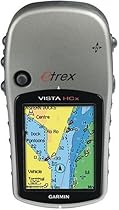
Garmin eTrex Vista HCx Color High-Sensitivity Mapping Handheld GPS


FANTASTIC5

If you are reading this and the other reviews of the Garmin eTrex Vista HCx then you are doing your homework and wondering if this GPS is as good as all the hype makes it out to be. The short answer is YES! I have an old Garmin 12 Map which has served me well but was getting a bit long in the tooth. I wanted something a bit smaller lighter with color screen and was water tight. The Vista HCx meets all of these needs and so many more. It is small in size but with a fairly big and bright screen (easily readable in the sun) for its size.

Every review I read touted the extra sensitive antenna and how it picked up and locked onto satellites inside of homes or buildings. Well I can honestly tell you that it does all this and does it quick. How this happens it Garmin magic. I was always told you had to have line of sight to pick up satellites but not in the case of the Vista HCx it can get them just about anywhere short of being in a bunker.

The menu is intuitive and easy to navigate so much more that my old Garmin 12 map. The long story short this little GPS is the one for everyone else to beat. If you are seriously considering a GPS purchase for hiking or navigating the back country do not look elsewhere this is the one to get!

The base maps in the Vista HCx are of course upgradeable through additional accessories purchases from Garmin (at substantial cost) but worth the money. How Garmin managed to pack so much into so little a package is a mystery to me. Do yourself a favor stop reading the review and just buy one you will not be disappointed.

BTW I purchased mine through Amazon.com and took advantage of the free shipping. It arrived four days ahead of when it was scheduled to arrive which was a nice surprise. Amazon has a very good price and I have always been happy with my purchases through them. And no I am not getting paid to say these nice things about Amazon I am just a very satisfied customer.


Dan...

More detail ...
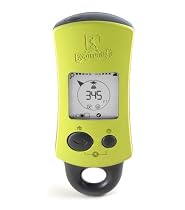
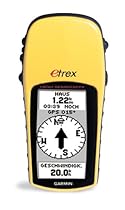
Garmin eTrex H Handheld GPS Navigator


Best technology in a starter unit5

This is my primary Geocaching GPS. The high sensitivity chip has the same strong processing power and thus signal sensitivity and position resolution as any of the more expensive units. It gives me excellent accuracy in areas where my older GPS units just give up even dense forest cover. The software that drives the unit is the same as the older Yellow model (see below) and has stood the test of time.


If you're only interested in point to point navigation (geocaching trail tracks or just finding your way back to the car or the ski chalet) then this unit will do a great job for a no-regrets price. If you're looking for road network navigation then this isn't for you.


Be aware that this is the 'H' for 'High Sensitivity' unit introduced in 2007. It's appearance is almost identical to older Yellow Etrex units the difference being "High Sensitivity" in red letters just above the screen. Although the older units do work and may still be found their worth is significantly lessened by the availability of this unit. That's something to keep in mind when looking at used or "new old stock" units at other venues.


One thing that other reviews mention is true - straight out of the box it takes a long time (hours) to acquire it's almanac (a digital description of where satellites are in the sky which is transmitted periodically) and then it's satellite signals. Mine took at least 3 hours and had me thinking it was defective until it finally locked in. Don't despair this is a one-time thing - once accomplished start-up time is about 5 seconds.More detail ...

Garmin eTrex Venture HC GPS Receiver


An outdoor GPS receiver as revolutionary as the original eTrex5

Before buying this new Venture HC I had spent many hours trekking with several of the original eTrex models over the years. I think it's fair to say that while the concept of the original eTrex was great the execution was frequently disappointing.


It disappoints no more. The Venture HC is the eTrex perfected. It remedies almost every shortcoming that plagued the original models. The new high-sensitivity receiver is amazingly effective. Countless times I've stood in wide open spaces cursing my old eTrex because it wouldn't acquire a single satellite. Last night I turned on the Venture HC on the bottom floor of my two story house and it locked onto 8 satellites...through the roof and the upper floor! No more "need a clear view of the sky" messages. Amazing.


The old monochrome display has become color and the user interface is now substantially more intuitive while adding even more functionality. The cable which was serial on previous models has been upgraded to USB another welcome improvement. The case is somewhat wider than before but the design bears a strong resemblance to the original eTrex.


A basemap is included but it's just that - basic. It shows the largest highways bodies of water and has some limited capability to display highway exit services. If you need turn-by-turn street directions an eTrex is not for you. This is a GPS receiver true to Garmin's outdoor GPS heritage.


Promised battery life (14 hours) is near the bottom of the range when compared to the existing eTrex models but is still perfectly adequate and has posed no problems.


One weakness that remains is Garmin's waypoint manager PC software. It has the feel and functionality of a software product released circa 1994. Garmin could certainly develop a better PC interface. For $49 you can buy ExpertGPS from Topografix or download the free version (EasyGPS)from their website. Either is far more functional than the Garmin OEM software.


Still the software criticism is a quibble. The Venture HC itself is great. It is a market changing product that renders all previous eTrex models (and many competitors) obsolete. Finally an affordable outdoor GPS receiver that I can wholeheartedly recommend.

More detail ...
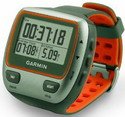
Garmin GPS 60CSx Handheld GPS Navigator


Top of the line!5

The first reviewer didn't really do his research before he purchased this or else he would know that it only comes with basemaps. The other fact he would know is that that's how all GPS vendors work. They want you to buy their maps separately and only their maps will work on their hardware.


Now I previously owned a 60CS which I loved after trading in my Vista. With the newly upgraded 60CSx you get a couple of additional functions that make it much better than the 60CS. First there's the SiRF III chipset. It is by far the best chipset out there right now. It's super sensitive and super fast. You can lock onto satellites even in your house in many cases! No longer will you loose reception in tricky situations. Most of the time you can even keep the 60CSx in your backpack and it will still track your movements.


The other highly requested function for many years is the expansion memory now in the form of a microSD. Now you can load almost half of the U.S. into 512mb of microSD. Later larger capacity microSD cards will be released that will allow you to loan the entire US! That's awesome!


Two things that you will loose by going to the 60CSx from the 60CS the alarm clock and the passive barometric tracking. Apparently the new 60CSx no longer has a sleep mode so that these two things will not continue to work if you turn OFF the unit. The 60CS had a sleep mode so that the altimeter would still record your barometric after the unit was turned off and wake up to sound the alarm clock but not with the new 60CSx.


Most people don't use these functions anyway so I don't think you'll miss them. Also the SiRF III and microSD more than make up for those two shortfalls.More detail ...
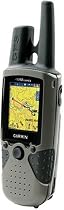
Garmin Forerunner 305 GPS Receiver With Heart Rate Monitor


Excellent workout tool4

I like this thing quite a lot. I've had it for about three weeks and have used it on 12 workouts so far. I use it primarily for running with biking a secondary usage. The main reason I wanted it was for the instantaneous readout of distance running pace and heart rate the latter needed for the speed work I want to do this running season.


The core functionality (distance and heart rate monitoring) works perfectly. There's none of the signal drops I've had with other heart monitors. Once the satellites are initially acquired I've only had one dropout when I was outside. The initial acquisition of the satellites can be quirky and can take some time. The accuracy (according to the readout) is +/- 25ft depending on how many satellites can be found. I've compared the distance measurement on the GPS with a known measured distance on one of the trails I run on (the Chicago lakefront path). The GPS always increments a mile when I'm within 5 or 10 feet of the mile marker sign on the path. Well I guess that's the least I should expect from a $350 GPS unit! Of course it's bigger than a normal running stopwatch but that hasn't bothered me at all. The heart rate strap is also very comfortable and well-designed.


The display is crisp and has one outstanding feature: The information presented on the various pages can be completely user-customized. The default screen layout is rather poor but in just a few steps I could replace it with the information I wanted to see while I run. There are almost 40 different data fields you can choose from for display. Examples: current pace average lap pace average run pace heartrate distance.


The only disappointment is the point-in-time (instantaneous) pace measurement: It varies wildly during a run. I see swings as big as +/- 3 minutes/mile. I'm a marathoner and I know my pace is fairly consistent during a run. I just looked at my run today and according to the data the first mile varied from 5:57/mile to 12:06 mile. I suspect the problem is either in the averaging algorithm (too short a distance?) or in the uncertainty that results from different satellites coming in and out of view. The variations seem to get worse under tree cover compared with an open area. Luckily there's a lap-average pace that can be presented and at least that value is useful and more accurate. The bottom line is that you can't look at the watch and say "right now I'm running 9 mins/mile". There is the ability to specify a pace smoothing factor but I have it maxed out and still see the variations. The elevation readout also seems inaccurate but that isn't important to me.


Upload of workout data to the PC software (Training Center) is transparent. The PC software is very good for presenting time/distance/pace/heartrate/calorie data. However the maps it shows are very crude. I've worked a bit with one of the online subscription services (MotionBased). That looks really good and provides some additional functionality beyond the included Training Center software although I still haven't decided if it's worth the $$$ yet for long-term data storage. MotionBased allows export to Google Earth and it's tremendously cool to see your running path superimposed on a satellite image. You can recharge the unit through the USB port on your computer although it's slower than using the dedicated recharger.


I had hoped that owning this device would prove motivational for me and indeed it has. I can't imagine running or biking without it. Updating my training log is trivial now: Plug this thing into my computer and it's done. My hope is that a future software update will do something about the pace calculation (maybe a few additional levels of smoothing?). If so the Forerunner 305 would earn 5 stars+++.


Positives:


Flawless heart rate sampling

Great distance measuring and lap-average pace calculation

Seamless integration with a PC

Fully-automatic training log update

User-customizable display


Negatives;


Wildly-varying pace readout.

More detail ...

Garmin Forerunner Quick Release Kit


Excellent!5

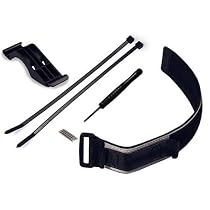
This kit contains a velcro wrist strap with a sturdy plastic mounting clip. The original strap pieces are permanently removed using the supplied tool then the strap pins are replaced into the 305 body. The pins can then clip into the mount on the velcro strap or the identical part of the bike mount. Removing the unit from the bike and putting it on your wrist or vice-versa takes less than 5 seconds.


The reviewer who said you have to take several minutes to re-attach the original wrist straps after taking the 305 off your bike seems to have failed to grasp the concept; the velcro strap *permanently* replaces the original straps.


The only potential downside I can think of is that the clip on the velcro wrist strap could hang up on long sleeved clothing like a wetsuit so triathletes will want to put the strap on during T1. Other than that this is a very handy piece of kit!

More detail ...

Apisphere Geomate Jr Handheld GPS Geocacher


Fantastic supplemental geocaching tool5

I purchased two of these one for my kids and one for a friend.


THE GOOD

For my kids this is the perfect unit. We use the geocaching app on my Iphone as our main geocaching tool to get us into the vicinity and then the kids use their Geomate Jr to get them to the cache. My 6 year old can run into trees with it fall on it etc and it takes a licking and keeps on ticking (much better than him doing that with my iphone!) Because we have already been geocaching we were able to understand how to use this tool after a few button pushes. We did a side-by-side test with my iphone and the Geomate jr and the Geomate updated faster than my iphone and was more accurate under heavy tree cover conditions. Under normal conditions both the Iphone and Geomate Jr updated at similar times and had readings within 2 feet of each other.


NEEDS IMPROVEMENT

This tool is billed as the Grab and Go geocaching tool so easy that it will encourage everyone to get in the game. Well not quite. If you aren't already very familiar with geocaching trying to figure out what these buttons mean will just be confusing. You will need to read a book or go on the [...] website before you'll understand what a GC code is or have any clue what those coordinates mean. After you do make a find you can only mark 20 caches as found. You need the update kit to mark up to 99 caches as found (though they represent that it will eventually be up to 1000 found). However these issues are not a big deal because after you buy the update kit and do some reading you're as good as gold.


NO MAPPING

But perhaps the biggest feature that is lacking that truly prevents this unit from being a true Grab and Go unit is the the lack of a mapping capability. For this reason this is best as a supplemental unit. Mapping is important in geocaching because trying to find a geocache by going 3.6 miles NNE is about impossible to drive to. Roads generally don't travel in the direction that your compass happens to be pointing. And by the time you take a road in that general direction the compass will be pointing .6 miles West. You could drive around like this all day. The Iphone app shows the map of the area and where the geocache is located on the map so that you can drive to the general vicinity and then get out and hunt. The work around for this lack of a mapping feature on the Geomate Jr. is to go to the geocaching.com website and print out the maps to the geocaches you want to seek. Of course this relegates you to only planned geocaching trips instead of geocaching on the go because you happen to have a few extra minutes like you can do with the Iphone.


SUMMARY

This is a great supplemental unit and a must have for kids in a family of geocachers. However unless and until they provide a mapping capability on the Geomate Jr. this is not a true Grab and go unit and may not be the best choice as a stand alone unit.More detail ...

Garmin Forerunner 310XT GPS Enabled Sports Watch


Misleading: Not a Triathlete watch3

This device has been represented as a triathlete's watch and the first swim proof GPS watch. If you watch the video from Garmin or see any of the advertisements Garmin leads you to believe that this watch will collect reliable data for all 3 multisport events. It is reasonable for someone to assume this watch can be worn in a race and collect GPS data in the water since of course SWIMMING is the first event in a triathlon.


If you are considering buying this watch realize the following:


-This device does not collect usable data in the water period (other than time which any $20 waterproof watch can collect in a much smaller form factor). No heart rate data and totally unusable and inaccurate GPS data while in the water.


-There are preset modes for run bike and "other" in which "other" shows a person on skis (explain that one?). They intentionally omit a category for swimming despite advertising that this watch is for triathletes (see the photo I added under product photos).


-You will need to purchase a separate quick release kit if you want to use this watch on a bike. It does not get accurate data on a bike if you are wearing in on your wrist. It auto pauses then unpauses for most of the time I am riding if I wear it on my wrist -- even if I have it set to only auto pause when completely stopped. The quick release kit IS NOT the more common one for the 205 and 305 Garmin 010-10889-00 Forerunner 305/205 Quick Release Kit so do not buy that one. They have made a new one for this watch and most places do not have it in stock yet. As of the date I am writing this review it is not yet available on Amazon.com. Go to Garmin's website and look under the accessories tab for this watch. You will see a different model number. I have confirmed this with customer service. The part number for the proper quick release kit is: 010-11215-00. Google it.


-If you want foot cadence or the ability to track distance indoors and assume you get it for spending $400 on this device think again. You will have to buy a separate foot pod which costs $80-100 depending on where you buy it (earlier Garmin Forerunner watch kits included foot pods). Garmin Foot Pod SDM4 (ANT+)


-The watch is large and sits high on top of the wrist (they packed 20 hours of batter life into this watch) so to wear it under your wetsuit will let water in the wetsuit or you will have to wear it on top of (or crammed in front of) the wetsuit which will not allow you to remove your wetsuit without first removing the watch (thus adding time to your transition and sort of negating that whole "triathlete" angle). You can see a photo of this watch on my wrist under the photos section of the product.


-There is no way to turn off GPS tracking for only one of the 3 events in multisport mode. Therefore you will always either have incorrect GPS data recording for the swimming mode (or actually "other" since there is no "swim" mode as previously mentioned). I have called customer support and they confirm this. Their solution was to turn off GPS while I am swimming then reset and manually start a new timer and mode during transition 1 for my bike event. I'll let you be the judge of how to take that advice.


So in conclusion if you want to setup this watch for a bike and run and want the ability to wear the watch in the water before hand (and no start it unless you want some incorrect distance data included) you will need to buy:


$400 - the Garmin 310XT with HR

$25 - quick release mount kit (for wrist and bike) (no link in Amazon yet)

$80-100 - foot pod (if you want cadence)

Garmin Foot Pod SDM4 (ANT+)

$35-50 - speed/cadence sensor (if you want cadence for the bike)

GARMIN 010-10644-00 Speed/Cadence Sensor


You'll be into it for $575 retail. Garmin you did us wrong on this one. Some of us are willing to spend this kind of money on a product if it proves to do what it advertises itself to do. We're not asking it to do anything more than perform as advertised. I realize your fine print saves you from lawsuits but it doesn't gain you repeat customers. It sends them over to Polar.More detail ...

Garmin 010-00777-00 Foretrex 401 Portable GPS System


not ready for prime time2

One of my Foretrex101s expired a few weeks ago and I decided to replace it with the just released Foretrex401. It arrived mid-week and I had no trouble accessing and opening the Foretrex401 generated gpx file with Easy/ExpertGPS and Topofusion. The 401 appears as a USB drive in Windows. I was hoping to use the 401 along with the Garmin heart rate monitor during my mtbike rides instead of the my Edge205 and separate HRM. The 401 had no trouble picking up the HR reading and displaying the values.


Perhaps not surprisingly the Garmin website has no substantial information of the 401 as of yet and no discussion of what software will work with the 401.

[...]

At this point the Foretex401 appears to be corporate orphan that no Garmin division is able or willing to support. It is unclear if it is intended for jumping out of airplanes (jumpmaster function) hiking (altimeter/compass) cycling/fitness (HR/cadence) or providing a heads-up when ordinance is going to explode (countdown-up/timer). In addition to the above function wise the 401 adds a USB interface faster satellite acquisition and wireless data transfer to the venerable Foretrex101. It is slightly more compact in size than the 101 has a better strap attachments and stores the data is in a gpx file. Operationally the Foretex401 does what is it supposed to do but with no software included undocumented functions and virtually non-existent technical support most purchasers will be frustrated in trying to use the Foretrex401 right out of the box. A printed quick start guide is in the box but the manual in a pdf on the CD.


As noted above with some tinkering and non Garmin software I've been able to list and view the Foretex401 tracks waypoints routes and other data as well as transfer the data to GoogleEarth. For what Garmin lists as a basic handheld GPS it should be much more straightforward to operate and transfer data. I'll give it 2 stars until it is better supported.More detail ...

Garmin GPS 60Cx Handheld GPS Navigator


Very awesome product but map is lacking4

I still own my Garmin GPS 10. It's a wireless bluetooth gps device for a Pocket PC/Laptop. This product is so awesome I decided to stick with Garmin. This led me to the 60Cx.


The biggest con to this device is that the maps are very basic. Notice on all the 60Cx product images it'll say in small print "Shown with optional MapSource data." This might be bearable for hiking but is horrible for automotive use. You will need to buy detailed maps that can run over $100.


The extra features such as information on sunrise/sunset or fishing/hunting conditions are very convienent. This device is definately a dream for anyone who love gps functionality.


The color screen is also very nice. In direct sunlight I was able to see it with clarity. The brightness of the screen is at a perfect level for night use. It's not too bright and not too dim.


The controls are clumsy at times but i guess you'll get use to it. The sensitivity is great! I never got signal in my house with my GPS 10. The 60cx picked up signal with no problem.


My customization:


Garmin City Select North America v6 was included with my Garmin GPS 10. I registered the device online. Through Garmin's site I was able to generate a 2nd unlock code. I used this unlock code to installed City Select North American v6 onto my 60cx. It's funny that Garmin's site doesn't mention it was compatible with City Select. My 60cx now has detailed maps and added functions such as being able to search for addresses which wasn't possible with 60cx's basemaps. I am also very happy with the performance of the device. It basically does everything my Pocket PC and GPS 10 does. Once i installed the detailed maps this device has been a dream gps device. I used it in the car and for hiking. It will be great when I go visit New York for the first time.


Conclusion:

Overall I think this is a great gps device. It is solidly built and waterproof at that. Everything about it is great EXCEPT for the horrible basemaps. You will have to shell out over $100 for detailed maps but if you add up the total it still comes out cheaper than my Pocket PC + GPS 10 combo(about $640 for me). I think the 60cx is worth every penny.


EDIT:

May 2006


I've had the 60Cx for 3 months now. It is still an awesome device. One thing I want to comment on is battery life. I do not use regular alkaline batteries. I use Energizer Rechargables 2500mah and slow recharge at 8 hours per session. I entered in an address that was 2 hours from where I was started. It tracked my position estimated time til turn and estimated arrival time. When I got to my destination the GPS battery meter was at HALF. the GPS will only last on average of 4-5hours while on a route. This is still pretty good comparing it to my Dell Axim + GPS 10 combo. I am not sure how long it will last if you're just using it without being on a route.


I was a bit dissapointed that Garmin did not state how it got the 30 hours battery life. They might just mean 30 hours on standby.


Also the 60Cx does drain your batteries even while it is off. I had my unit stored in the drawer for a week. The batteries were drained. So it is highly recommended you get rechargable batteries for this device. If you are taking it with you on a trip bring at least two sets of battery.More detail ...

GARMIN 010-00564-01 Rino 530HCx 2-Way Radio With GPS/FRS/GMRS


Great Two-In-One5

I purchased the 530HCx about two weeks ago to use while deer hunting in East Tennessee. Everyone in our group has GPS and two-way radio to find our way around and communicate when we are in unfamilar territory. I have been searching for a device that will take care of both needs without having to handle two seperate pieces of equipment and the 530HCx has worked flawlessly so far.


The satellite positioning seems to be right on and positioning after start-up was quick. I used the unit to mark several deer trails rub lines and possible stand placements and I was able to return to those areas very easily. I used the averaging feature to fine tune the locations and was able to get within 5-7 feet of everything I marked.


Everyone in the group said that radio transmission was crystal clear they could hear my transmissions better than anyone elses. Don't get me wrong the Garmin in definetly a GPS first and radio second but I was very pleased with its two-way capabilities. It performed as well if not better than the midlands and motorolas in the group.


I also invested in TOPO US 2008 to install on the unit. I wasn't that impressed with the TOPO map but area detail is alot better than the basemap. We make several trips to Fort Campbell every year and all roads creeks and even fireMore detail ...

Blog Archive